

Facelift surgery remains one of the most effective solutions for reversing visible signs of facial aging. But if you’ve been researching options, you’ve probably seen terms like mini facelift and full facelift come up repeatedly.
Both procedures aim to tighten sagging skin, restore youthful contours, and reduce wrinkles, but the differences between them are significant. While a full facelift delivers dramatic, long-lasting results for the entire lower face and neck, a mini facelift is less invasive, focusing mainly on early sagging in the lower third of the face.
So, which option is right for you? Let’s see the differences in surgical approach, recovery, results, cost, and candidacy. By the end, you’ll have a clear understanding of which procedure best suits your goals.
What Is a Mini Facelift?
A mini facelift is a less invasive version of traditional facelift surgery. It’s often recommended for younger patients or those with mild to moderate sagging skin, especially around the jawline, nasolabial folds, and lower cheeks.
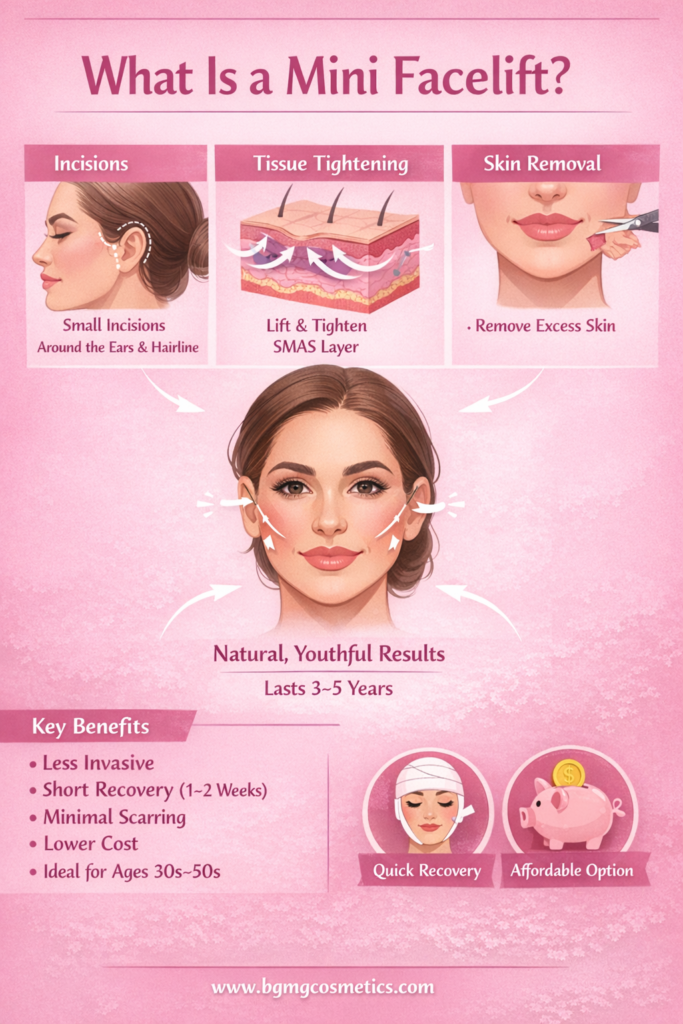
- Incisions: Shorter incisions are usually placed around the ears and sometimes within the hairline, making scars less noticeable.
- Tissue Work: The surgeon tightens the underlying SMAS layer (superficial musculoaponeurotic system) with minimal work on the neck.
- Skin Removal: Small amounts of excess skin are trimmed, giving a subtle lift.
- Results: Provides natural improvements with a fresher, youthful look, lasting 3 to 5 years on average.
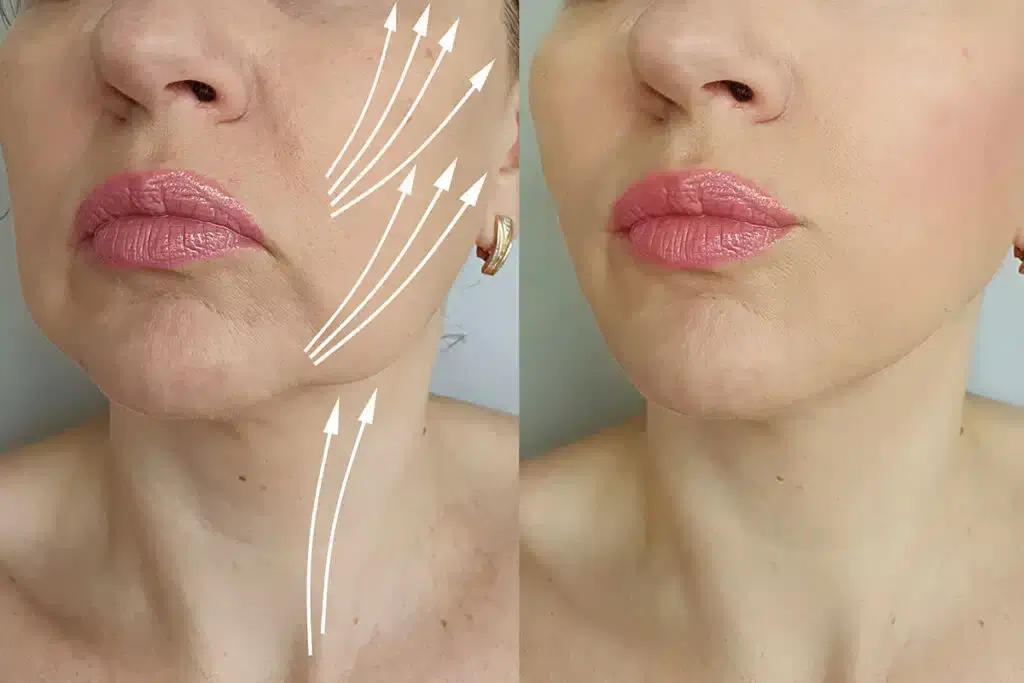
Key Benefits of a Mini Facelift
- Less invasive than a full facelift
- Shorter recovery (1–2 weeks)
- Minimal scarring
- Lower cost
- Ideal for patients in their late 30s to 50s with early aging signs
What Is a Full Facelift?
A full facelift (also called a rhytidectomy) is a more comprehensive procedure that addresses the entire lower face and neck. It’s designed for patients with moderate to severe sagging, deep wrinkles, and significant loss of skin elasticity.
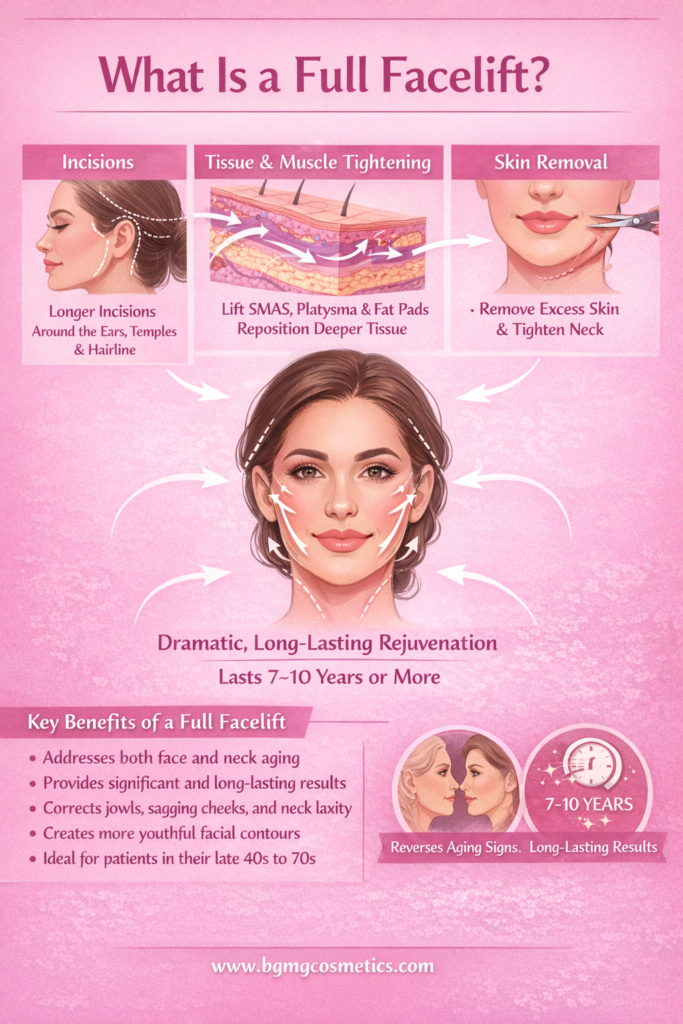
- Incisions: Longer incisions start at the temples, run around the ears, and extend into the hairline.
- Tissue Work: Involves repositioning deeper structures like SMAS and platysma muscles, tightening loose skin, and sometimes lifting fat pads for improved volume.
- Skin Removal: Excess skin is removed to smooth out jowls and neck sagging.
- Results: Delivers dramatic, long-lasting rejuvenation that can last 7 to 10 years or more.
We proudly stand as one of the best face lift specialists in California. Our patient-focused approach ensures you receive exceptional, personalized care from consultation through recovery.
Key Benefits of a Full Facelift
- Addresses both face and neck aging
- Provides significant and long-lasting results
- Corrects jowls, sagging cheeks, and neck laxity
- Creates more youthful facial contours
- Ideal for patients in their late 40s to 70s
Mini Facelift vs. Full Facelift
Here’s a clear breakdown of how these two procedures differ:
| Aspect | Mini Facelift | Full Facelift |
| Surgical Extent | Lower third of face, shorter incisions | Lower face + neck, longer incisions |
| Tissue Work | Tightens SMAS, minimal neck adjustment | Repositions SMAS + platysma, lifts fat pads |
| Recovery Time | 7–14 days | 3–6 weeks, sometimes longer |
| Results | Subtle, natural improvements (3–5 years) | Dramatic, long-lasting (7–10 years) |
| Cost | Lower (varies by surgeon/region) | Higher (due to complexity and time) |
| Invasiveness | Less invasive, less bruising/pain | More invasive, more swelling and discomfort |
| Ideal Candidates | Younger patients, mild sagging | Older patients, moderate to severe aging signs |
Factors That Determine the Best Facelift Option
Not everyone is a candidate for the same type of facelift. The choice depends on several factors, including:
1. Degree of Aging
- Mild to moderate sagging: A mini facelift is usually enough.
- Deep wrinkles, jowls, and neck laxity: A full facelift is more effective.
2. Skin Quality
- Patients with good elasticity may get excellent results from a mini facelift.
- Patients with significant skin laxity often require a full facelift.
3. Facial Anatomy
- Strong jawline + mild soft tissue sagging → Mini facelift.
- Weaker jawline + drooping neck and fat pads → Full facelift.
4. Health & Lifestyle
- Non-smokers and patients in good health are ideal candidates for both.
- Patients with medical conditions may be better suited for shorter, less invasive surgeries like mini facelifts.
5. Desired Results
- Subtle, natural refresh: Mini facelift.
- Dramatic rejuvenation with longevity: Full facelift.
6. Recovery Tolerance
- Mini facelift: Faster recovery, less downtime.
- Full facelift: More time off work and social activities.
Anesthesia: Twilight Sedation vs. General Anesthesia
Another decision patients often face is anesthesia type.
- Mini Facelift: Often performed under twilight sedation (conscious sedation). Patients remain relaxed and semi-aware, with quicker recovery.
- Full Facelift: Typically requires general anesthesia for patient comfort and complete immobility during longer surgeries.
Your surgeon will recommend the safest option based on the complexity of your procedure and your health.
@chrissycrna Reply to @leanna_m20 #crna #anesthesia #health #surgery #medical ♬ original sound – Chrissy CRNA
Recovery: What to Expect
Mini Facelift Recovery
- Mild swelling and bruising for 1–2 weeks
- Stitches removed in 5–7 days
- Back to light activities in 7–10 days
- Full results visible in 4–6 weeks
Full Facelift Recovery
- Swelling and bruising last 2–4 weeks
- Stitches removed in 7–10 days
- Return to work in 3–4 weeks
- Full healing may take 3–6 months
Cost Differences
The cost of facelift surgery varies depending on location, surgeon expertise, and whether additional procedures (like eyelid surgery or fat grafting) are included.
- Mini Facelift: Generally more affordable, since it’s less complex and shorter in duration.
- Full Facelift: Higher cost due to extended surgical time, deeper tissue work, and longer recovery care.
In 2025, the average cost ranges are:
- Mini facelift: $5,000 – $10,000
- Full facelift: $12,000 – $20,000+
Longevity of Results
- Mini Facelift: Results last around 3–5 years.
- Full Facelift: More dramatic results lasting 7–10 years or longer.
Lifestyle habits (sun exposure, smoking, skincare) and genetics play a big role in how long results last.
Other Advanced Facelift Techniques
Beyond mini and full facelifts, some patients may benefit from specialized approaches:
- SMAS Facelift: Focuses on tightening the muscle layer for natural results.
- Deep Plane Facelift: Involves repositioning deeper tissues for longer-lasting outcomes, especially effective for sagging cheeks and mid-face.
- Neck Lift (with facelift): Addresses banding and loose skin in the neck, often combined with a full facelift.
These techniques are best chosen after consultation with a qualified surgeon.
Choosing the Right Facelift Option for You
The choice between a mini facelift and a full facelift depends on:
- Your age and degree of facial aging
- Desired results (subtle vs. dramatic)
- Tolerance for recovery time and downtime
- Budget considerations
- Surgeon’s recommendation based on anatomy
Patient Expectations & Consultation
The most important factor in facelift surgery is realistic expectations. Patients must understand that:
- A facelift improves sagging and contour but does not stop aging entirely.
- Maintenance with skincare, injectables (like Botox or fillers), and healthy lifestyle habits can extend results.
- A consultation with a board-certified plastic surgeon ensures a customized plan tailored to your needs.
Conclusion
When comparing mini facelift vs. full facelift, the decision largely depends on how advanced your facial aging is, how much downtime you can allow, and the results you want to achieve.
- A mini facelift is best for patients with mild to moderate sagging who want a subtle, refreshed look with faster recovery and lower cost.
- A full facelift remains the gold standard for more significant aging, delivering dramatic, long-lasting rejuvenation of the face and neck.
Ultimately, the best way to decide is through an in-person consultation with a skilled facial plastic surgeon who can assess your anatomy, goals, and health to recommend the safest and most effective option.